Car Key Won't Turn in the Ignition – What Should I Do?
If your key goes into the ignition but won't turn, don't force it. The cause can be as simple as pressure on the steering lock, but a worn key blade or a fault inside the ignition lock/barrel can produce the same symptom.
Quick Check
Try gently relieving pressure on the steering wheel, make sure the vehicle is fully in Park where applicable, and compare a spare key if you have one.
One Key Won't Turn
If a spare key works normally, the problem is more likely to be wear or damage to the original key.
Both Keys Struggle
If both keys behave the same way, the ignition lock/barrel or steering-lock mechanism becomes more relevant.
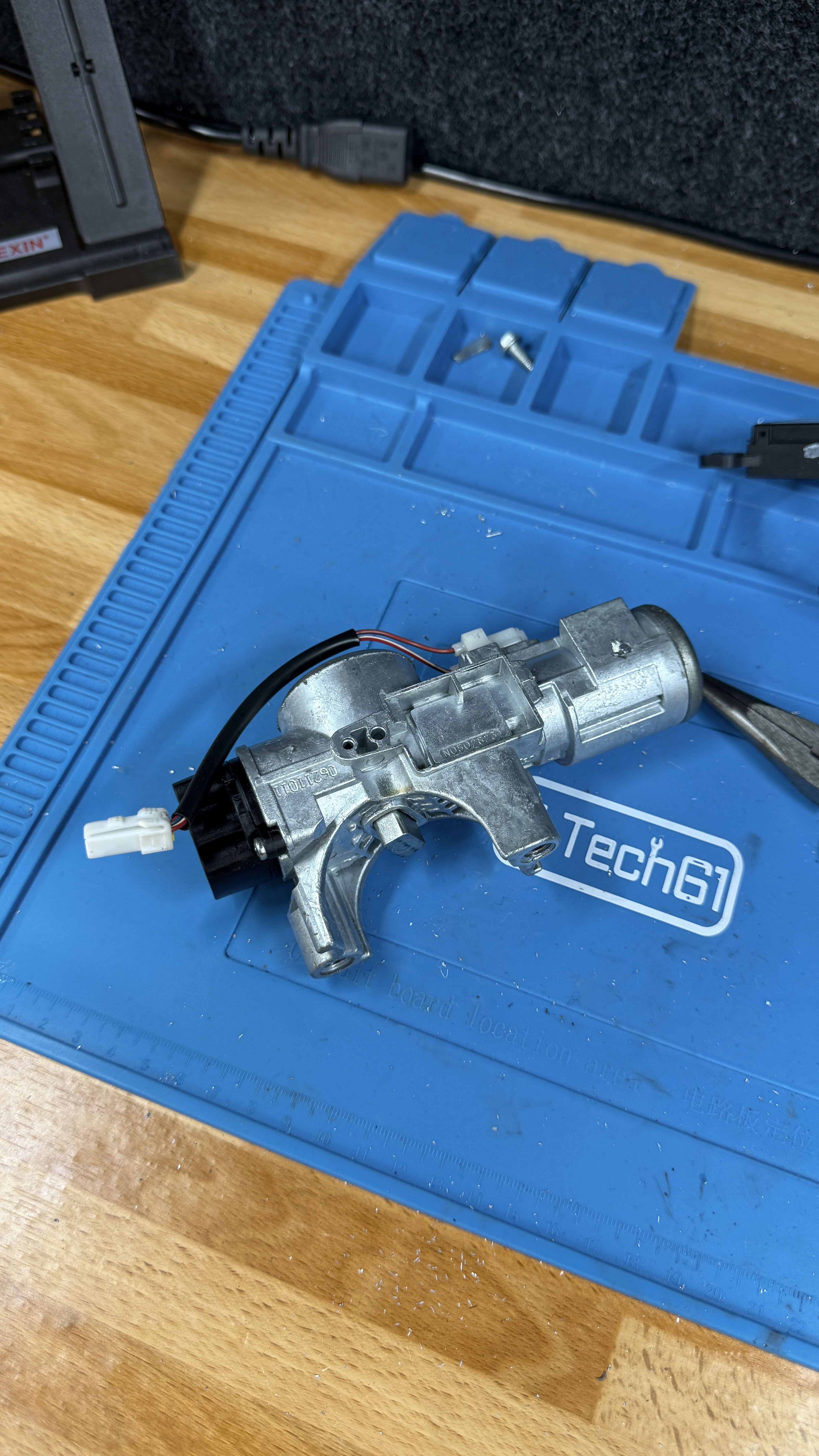
Ignition barrel removed for diagnosis during a real mobile repair — the kind of component involved when a key won't turn.
Do not keep forcing a stiff key. A key that is becoming progressively harder to turn can eventually snap or leave the ignition unusable.
What Should I Try First?
Do Not Force the Key
If it feels mechanically blocked, stop applying heavy twisting pressure. A snapped key can turn a repairable ignition problem into a more complicated extraction and lock repair.
Relieve the Steering Lock
Move the steering wheel gently left and right while applying light turning pressure to the key. Usually one direction will have slightly more movement.
Make Sure an Automatic Is Fully in Park
Only where applicable — apply the brake and move the selector firmly into Park rather than leaving it between positions.
Try the Spare Key
If the spare works normally, compare the keys before assuming the ignition barrel has failed.
Look at How the Key Behaves
- Does it insert fully?
- Does it turn a few millimetres then stop?
- Is the steering wheel locked?
- Does lifting the key slightly change anything?
- Does the spare behave differently?
- Has the fault gradually become worse?
Stop If Repeated Attempts Are Required
If the key eventually works only after several minutes of wiggling or repeated attempts, that is a warning sign rather than a successful repair.
Why Won't My Car Key Turn in the Ignition?
A key that will not rotate is a symptom, not a diagnosis. Several faults can feel very similar from the driver's seat.
1.Steering Lock Under Load
One of the simplest causes is pressure on the steering lock.
If the steering wheel was turned after the key was removed, or the vehicle was parked with the front wheels pushing against a kerb or slope, the steering-lock mechanism can be loaded heavily enough to prevent the ignition lock turning normally.
While applying only gentle turning pressure to the key, move the steering wheel in the direction that has some available movement. Do not violently twist the key.
If releasing steering-wheel pressure immediately allows the key to turn normally and the fault does not keep returning, the ignition barrel may not be faulty.
2.Worn Key Blade
A physical key blade wears over time. The peaks and cuts that operate the lock can become rounded, particularly when the same key has been used for years.
- spare key turns more easily
- main key looks visibly polished or rounded
- key works when lifted or wiggled slightly
- door lock and ignition behave differently
- fault has developed gradually
If an unworn spare key turns the ignition normally, having a correct replacement blade cut can be more appropriate than replacing the ignition barrel.
3.Worn or Sticking Ignition-Barrel Wafers / Tumblers
Mechanical ignition barrels contain internal locking elements that must align correctly with the key before the cylinder can rotate. Depending on lock design these may be referred to as wafers, tumblers, sliders or lock elements.
As the lock and key wear, one or more internal elements can begin sticking or sitting too high, preventing the barrel from rotating even though the key is fully inserted.
- key inserts completely
- steering lock is not obviously loaded
- key occasionally turns after several attempts
- fault becomes progressively more frequent
- wiggling or moving the key used to work but eventually stops
- both keys may eventually struggle
This exact kind of sticking-wafer behaviour is well documented by owners of older Honda ignition locks and similar mechanical systems. Do not dismantle the barrel yourself.
4.Internal Ignition Lock / Housing Failure
The fault is not always the removable key barrel itself. Internal parts of the steering-lock or ignition housing can wear, jam or break.
- key suddenly stops turning completely
- steering wheel may remain free rather than locking normally
- key turns only part way
- something feels mechanically blocked
- problem persists with multiple keys
- previous stiffness has become complete failure
This is particularly relevant to some Volkswagen Group ignition assemblies where the barrel, steering-lock housing and internal mechanism can produce similar symptoms.
5.Automatic Gear Selector / Park Interlock
On some automatic vehicles, the ignition and key-removal system is linked to the selector position.
- make sure the selector is fully in Park
- apply the brake normally
- move the selector firmly into Park rather than leaving it between positions
An interlock fault or selector that is not correctly registering Park can sometimes prevent normal ignition or key operation. This does not apply universally.
6.Damaged or Bent Key
A key does not need to be badly bent to cause problems inside a worn lock.
- twisted blade
- cracking near key head
- damaged blade edges
- key previously dropped or bent
- copied key cut poorly
If the key feels as though it may snap, stop using force.
7.Foreign Material / Lock Contamination
Dirt, debris or internal contamination can sometimes make an ignition lock stiff.
Spraying large amounts of general-purpose oil into an ignition barrel can attract dirt and may make the problem worse. If lubrication is genuinely appropriate, the correct lock-safe product should be used sparingly. Do not insert screwdrivers, picks or tools into the ignition.
8.Cold / Frozen Lock
In very cold conditions, moisture inside a mechanical lock can freeze.
Do not use flames, boiling water or aggressive heating to thaw a lock.
The Steering Wheel Is Locked and the Key Won't Turn
This is one of the first situations to rule out because the ignition barrel may be perfectly healthy.
If the steering wheel was turned after the key was removed, or the vehicle was parked with the front wheels pushing against a kerb or slope, the steering-lock mechanism can be loaded heavily enough to prevent the ignition lock turning normally.
While applying only gentle turning pressure to the key, move the steering wheel in the direction that has some available movement. Do not violently twist the key.
If releasing steering-wheel pressure immediately allows the key to turn normally and the fault does not keep returning, the ignition barrel may not be faulty.
If the key still refuses to turn after steering-lock pressure has been relieved, continue checking the key and ignition lock rather than forcing it harder.
The Spare Key Works But My Main Key Doesn't
This is one of the strongest simple clues that the problem may be the original key.
Possible causes:
- blade wear
- bent or twisted blade
- inaccurate previous copy
- physical damage
A replacement key should be cut accurately from the correct key information rather than simply copying severe wear from an old blade where the vehicle or lock allows a better method. See our car key cutting and replacement car keys pages for more.
Both Keys Won't Turn
If two correctly cut keys behave in exactly the same way, attention shifts toward the ignition lock itself.
Possible areas:
- sticking or worn wafers
- damaged cylinder
- steering-lock mechanism
- internal lock housing
- selector or interlock issue where applicable
Both keys failing does not prove the lock is broken — but it makes the lock more relevant than the key.
The Key Is Getting Harder to Turn Over Time
A gradually worsening ignition is one of the most important warning patterns.
Symptoms can progress from:
- occasional stiffness
- needing to move or wiggle the key
- several attempts before it turns
- key becoming difficult to remove
- complete failure to rotate
If the ignition has been getting progressively worse, arranging repair before it completely jams can reduce the chance of being stranded or snapping the key.
The Key Goes In But Only Turns Part Way
Possible causes include:
- internal barrel or mechanism wear
- steering-lock mechanism
- ignition housing fault
- selector interlock on some vehicles
Do not confuse this with a key that turns all the way to START but the engine does not crank — that is a different problem.
The Key Won't Go All the Way Into the Ignition
This is a distinct symptom from a key that inserts normally but will not rotate.
Possible causes:
- foreign material
- damaged key
- collapsed or stuck internal wafer
- damaged lock face
- internal barrel failure
Do not force the blade deeper or insert tools into the lock.
This symptom can indicate different internal damage from a key that inserts normally but will not rotate.
The Key Turns But the Car Doesn't Start
If the key rotates normally through the ignition positions but the engine does not start, that is not the main problem covered by this page.
Possible categories include:
- battery or starter issue
- ignition-switch electrical fault
- immobiliser or key-authorisation fault
- engine-management fault
For key-recognition warnings rather than a mechanical key that won't turn, see our Car Key Not Detected page. For key programming issues, that page may also be more relevant.
My Key Is Stuck and Won't Come Out
A key that has turned but will not return to the removal position is a different symptom from a key that will not rotate from the OFF position.
Possible categories:
- selector not registering Park
- worn lock or barrel
- internal ignition mechanism
- steering-lock or interlock fault
For Nissan-specific key-stuck symptoms, see our Nissan key stuck in ignition page.
Ignition Problems by Manufacturer
Volkswagen Group Ignition Key Problems
Key-won't-turn and ignition-barrel problems are frequently reported on Volkswagen Group vehicles, particularly older mechanical ignition systems shared across Volkswagen, Audi, SEAT and Škoda platforms.
- key becoming progressively stiff
- key turning only part way
- key refusing to turn
- ignition lock mechanism wear
- internal steering-lock or housing problems
- key sticking in ignition
- both keys eventually behaving the same
Because several Volkswagen Group vehicles share related ignition-lock architecture, a similar symptom can come from the key blade, removable barrel, steering-lock housing or another part of the mechanical ignition assembly. VW ignition barrels do not always fail, and one replacement part does not fix every model.
Honda Key Won't Turn in Ignition
Older Honda mechanical ignition locks are another well-known example where worn or sticking wafers can produce a key that inserts normally but refuses to turn.
Owners often describe a gradual progression from occasional stiffness to repeated attempts and eventually complete refusal to turn. Trying several keys and finding the same behaviour makes internal lock wear more relevant. Not all Honda ignition failures are wafer problems.
Nissan Micra K12 Ignition Problems
The Nissan Micra K12 is a particularly useful example because some versions use an intelligent-key ignition knob system rather than a simple conventional ignition barrel.
- ignition knob or key will not rotate
- steering lock not releasing
- green or red key indicator behaviour
- keyless functions working but ignition not rotating
- mechanical lock or steering-lock faults
On a K12, it is important to distinguish a genuinely jammed mechanical ignition or steering-lock mechanism from an intelligent-key or immobiliser authorisation problem. Not every K12 issue is a worn barrel.
See our dedicated Nissan ignition page →Fiat 500 / Punto Ignition Key Problems
Fiat 500 and Punto owners also report cases where the ignition key becomes difficult or intermittently impossible to rotate.
- steering-lock load
- key or barrel wear
- ignition mechanism sensitivity or failure
- selector or interlock on applicable automatic vehicles
There is no universal Fiat defect — each case needs its own diagnosis.
Land Rover / Defender / Discovery
Older Land Rover mechanical ignition and steering-lock assemblies can also develop wear and sticking problems.
- key difficult to rotate
- steering-lock involvement
- barrel or mechanical wear
- worsening over time
This is not the same as modern Land Rover or Jaguar keyless electronic steering-lock problems, which are a different system entirely.
Mercedes — When It Isn't a Normal Ignition Barrel
Some Mercedes vehicles use electronic ignition switch and electronic steering-lock systems rather than a conventional mechanical ignition barrel.
- key inserted but no expected response
- steering lock does not release
- key does not electronically enable ignition
- intermittent electronic lock failure
This is fundamentally different from a worn mechanical key blade or sticking ignition wafer.
See our Mercedes Steering Lock Repair page →Nissan Micra K12 Ignition Barrel Repair
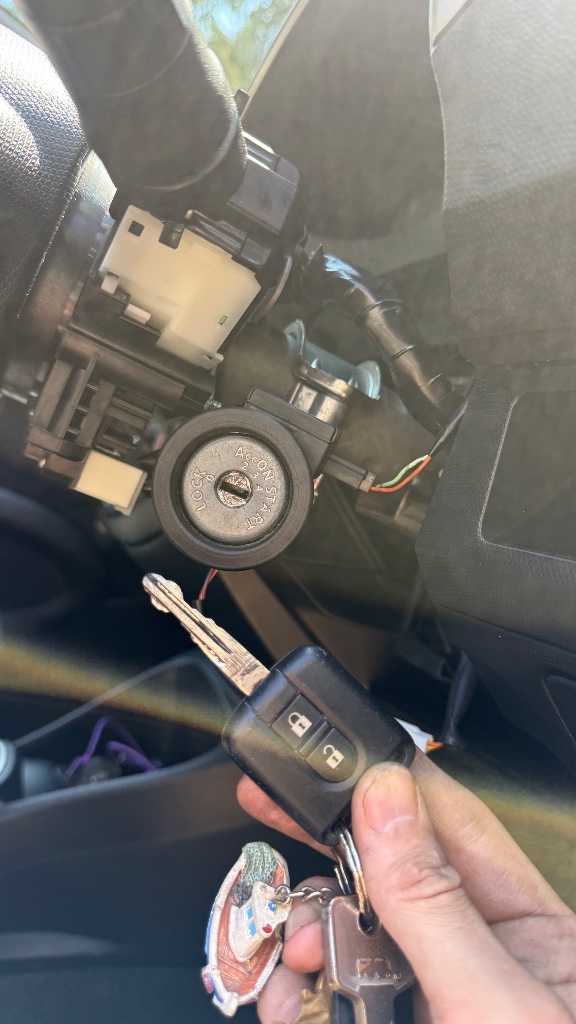
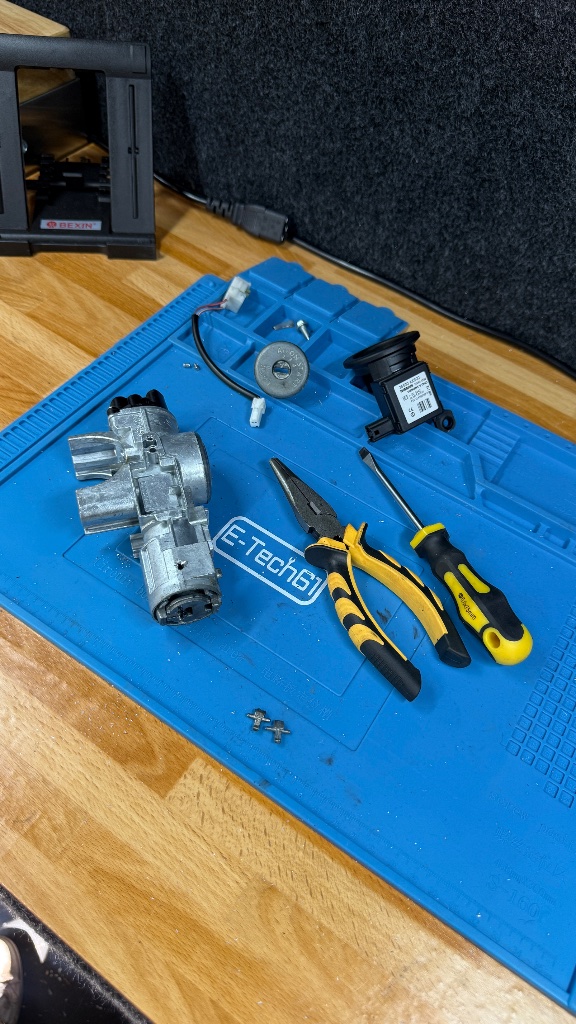
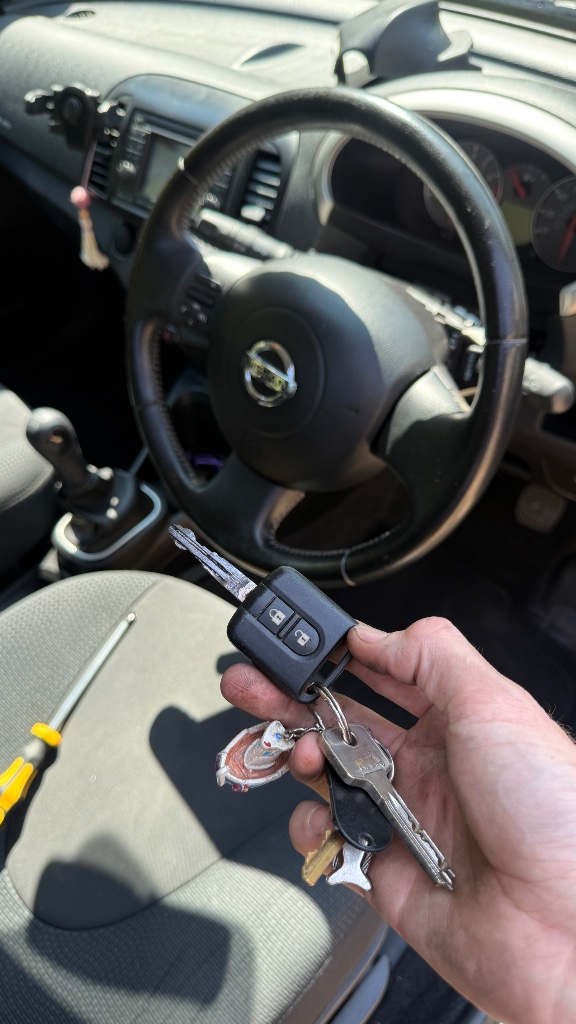
This is a genuine KeyLogik job involving a Nissan Micra K12 where the key was catching every time it was removed from the ignition — a classic symptom of internal barrel wear. The ignition assembly was removed, dismantled on the workbench, a worn internal trigger was identified and replaced, and the ignition was reassembled and refitted with smooth key operation restored.
Should I Spray WD-40 Into the Ignition?
Do not flood an ignition lock with general-purpose oil.
Some lubricants can temporarily free a sticky mechanism but also attract dirt or leave residue. The correct product depends on the lock design and condition.
If a mechanical ignition is already repeatedly sticking, lubrication should not be treated as a permanent repair. Graphite should not be used indiscriminately either.
Can I Keep Wiggling the Key Until It Works?
If moving the key used to make it work but the problem is becoming more frequent, continued wiggling is not a repair.
Risks include:
- further key wear
- barrel wear
- damaged internal wafers
- key snapping
- complete lock seizure
Can an Auto Locksmith Fix an Ignition That Won't Turn?
Often, yes — but the correct repair depends on whether the fault is in the key, barrel, steering-lock mechanism or another part of the ignition system.
Depending on vehicle support, KeyLogik may be able to:
Not every ignition can be repaired mobile, and not every failed barrel must be replaced. Diagnosis first can avoid replacing a barrel when the real problem is the key or steering-lock load. Send us your details and we can check current support for your vehicle.
WhatsApp UsWill I Need a New Key?
Not necessarily.
- If the spare works → a worn or damaged main key becomes more likely.
- If both keys fail → the ignition lock or mechanism becomes more relevant.
- If the lock is repaired or rebuilt to the original key → a completely different key may not be necessary.
- If the barrel is replaced → key, blade and immobiliser requirements depend on the vehicle and repair method.
Should I Replace the Whole Ignition Barrel?
Not automatically.
Possible solutions depend on the failure and can include:
- correct replacement key
- lock cleaning or service where genuinely appropriate
- wafer or barrel repair
- barrel replacement
- steering-lock housing repair or replacement
- ignition-switch repair where the mechanical key turns but electrical switching fails
Diagnosis first can avoid replacing a barrel when the real problem is the key or steering-lock load.
Quick Diagnostic Table
Diagnostic guide only — not a guaranteed diagnosis.
What Information Should I Send KeyLogik?
Ignition Won't Turn in Oxfordshire?
KeyLogik is a mobile auto locksmith primarily serving Oxfordshire and surrounding counties, including Berkshire, Buckinghamshire, Wiltshire, Hampshire, Surrey, Bedfordshire and Northamptonshire.
We regularly attend customers in Oxford, Didcot, Banbury and Bicester. If your key won't turn in the ignition, send us your vehicle details and we can check whether we currently support your make and model.
Key Won't Turn in the Ignition?
Send us your vehicle details and we can check whether the vehicle and key system are currently supported.