Car Says Key Not Detected – What Should I Do?
If your car says "Key Not Detected", "No Key Detected" or "Key Not Recognised", it means the vehicle is not detecting the smart key in the way it expects to. It does not automatically mean the key needs replacing or programming.
A weak smart-key battery is one possible cause, but so are a damaged key, the key being outside a reliable detection area, low vehicle voltage, interference, a faulty smart-key antenna or receiver, or a vehicle-side security-system fault.
One of the most useful checks is whether the car can still detect the key using its manufacturer-provided backup sensing method. On some vehicles this means holding the key directly against the Start/Stop button; other vehicles use a specific sensing point, slot, steering-column area, centre-console position or another designated location. The correct position varies by make and model, so the owner's manual should be followed.
If the spare key works normally while the main key does not, the main key becomes the strongest suspect. If neither known-working key is detected, vehicle-side diagnosis becomes more important.
KeyLogik is a fully mobile auto locksmith — we come to your home, workplace or roadside across Oxfordshire and surrounding counties.
What Does "Key Not Detected" Actually Mean?
"Key Not Detected" is a symptom rather than a diagnosis.
The vehicle expects to detect an authorised smart or proximity key but is not receiving the normal response it expects.
That does not automatically mean:
- the key has lost its programming
- the immobiliser is faulty
- the key battery is definitely dead
- a replacement key is required
- the vehicle module is faulty
Further checks are needed to establish whether the problem is key-side, vehicle-side or simply related to normal wireless detection.
Some manufacturers display separate warnings such as "Low Key Battery", "Key Not in Vehicle", "Key Not Detected" and "Check Smart Key System". These messages should not automatically be treated as meaning the same thing.
What Should I Try First?
Try the Spare Key
If you have a spare key, try it before buying parts or attempting programming.
If the spare works normally while the main key does not: the vehicle has demonstrated that it can still recognise an authorised key. That makes the original key much more likely to be the source of the problem.
If neither previously working key is detected: the vehicle battery, smart-key receiver or antennas, wiring or vehicle security system become more important suspects.
Try the Manufacturer's Backup Key-Sensing Method
Many push-button-start vehicles have a backup method for recognising the smart key when normal wireless detection is unavailable. This is one of the most useful diagnostic checks you can carry out.
Depending on the vehicle, the backup transponder or sensing antenna may be located:
- in or behind the Start/Stop button
- immediately next to the Start/Stop button
- at a marked sensing area on the steering column
- in a key slot
- inside the centre console
- near a cupholder or storage compartment
- at another manufacturer-designated point
The exact sensing position is vehicle-specific. Always check the owner's manual for the correct emergency key-detection or start procedure.
For example, some Hyundai and Kia smart-key systems instruct the driver to press the Start/Stop button using the smart key itself when "Key Not Detected" is displayed. Other manufacturers use a different sensing location.
Why this test matters: If the vehicle starts when the key is placed against the correct backup sensing area but does not detect the key normally from your pocket or elsewhere in the cabin, that is a useful diagnostic clue. Possible causes then include a weak smart-key battery, failure of the key's normal RF communication, damaged smart-key electronics, a vehicle interior antenna or receiver fault, or interference.
Important: The backup method working does not prove that the key battery is definitely flat. It only proves that the vehicle can still authenticate the key through its fallback detection method.
Check the Smart-Key Battery
If the vehicle uses a smart or proximity key, fit the correct battery and make sure it is installed with the correct polarity.
On smart or proximity keys, the coin-cell battery powers the normal remote and proximity communication system, so a weak battery can reduce detection range or cause intermittent detection.
Critical distinction: This is different from many conventional bladed or transponder keys. On many of those keys, the immobiliser transponder used for engine starting is passive and does not rely on the remote-button battery.
Do not assume that changing the remote battery will fix every immobiliser-recognition problem — it depends on the key type.
Check the Vehicle 12V Battery
If the vehicle battery has recently gone flat, needed a jump start or is showing other electrical symptoms, check its condition before assuming the smart key needs replacing.
Useful related symptoms include:
- slow cranking
- dim lights
- multiple warning messages
- electronics resetting
- recent jump start
- battery recently completely discharged
Low or unstable vehicle voltage can cause electronic systems to behave abnormally, including the systems involved in key detection. A weak vehicle battery does not always cause Key Not Detected, but it is worth checking.
Remove Possible Interference
Move the smart key away from other keys, electronic devices, metal cases and wireless accessories and try again. This is a secondary check — radio-frequency interference is not the most common cause, but it can occasionally prevent normal smart-key communication.
If It Still Fails, Diagnose It
If the spare-key test, correct smart-key battery and manufacturer backup sensing method do not resolve the problem, diagnosis is more useful than repeatedly replacing or reprogramming keys. The key and vehicle should be assessed with the right equipment before any parts are bought.
Key Not Detected – Quick Checks
- Try your spare key
- Try the manufacturer's backup key-sensing method
- Check or replace the smart-key battery if appropriate
- Check whether the vehicle battery appears weak
- Move the key away from other electronics and metal objects
- Note whether the remote buttons still work
- Tell the locksmith whether one or both keys are affected
The Car Starts When I Hold the Key Against the Start Button
If your vehicle normally says Key Not Detected but starts when the smart key is held directly against the Start/Stop button, that is a valuable diagnostic clue.
On vehicles designed to use the Start/Stop button as the emergency sensing point, the backup system can authenticate the key without relying on normal proximity detection in the same way.
Possible reasons normal detection is failing can include:
- weak smart-key battery
- smart-key RF transmitter problem
- internal key fault
- interior keyless antenna or receiver problem
- radio-frequency interference
This does not automatically mean the smart-key battery is flat and it does not automatically mean the key needs programming.
If the backup method works reliably but normal proximity detection does not, tell the locksmith exactly this. It can significantly narrow down the diagnosis.
Where Is the Key Sensing Area in My Car?
There is no universal key-sensing location. Depending on the manufacturer and model it may be:
Do not repeatedly place the key around random parts of the dashboard. Check the vehicle handbook for terms such as:
If you send KeyLogik the registration number, model and year, we may also be able to identify what type of key system the vehicle uses before attendance — though this is not possible for every vehicle.
Why Does My Car Say Key Not Detected?
1. Weak or Dead Smart-Key Battery
On smart or proximity keys, a weak coin-cell battery can reduce normal communication range or cause intermittent detection.
Possible patterns include:
- key works only very close to the vehicle
- Key Not Detected appears intermittently
- backup sensing or start procedure still works
- remote range has reduced
- warning appeared after months or years on the same battery
These symptoms do not prove the battery is faulty — they are patterns that can be associated with a weak battery.
2. Key Outside or in a Poor Detection Position
Smart-key systems only operate within defined detection areas. The key can sometimes be physically inside the car but positioned where detection is poor.
Examples can include:
- in a bag or case
- in the luggage area
- close to metal objects
- at the edge of the cabin
- near other electronics
Detection distances vary by vehicle, so fixed distances are not given here.
3. Damaged Smart-Key Electronics
Possible causes include:
- water ingress
- impact or drop damage
- circuit-board damage
- failed transmitter electronics
- damaged battery terminals
- poor internal contact
If the spare key works perfectly and the suspect key does not, this becomes considerably more likely.
4. Low Vehicle Voltage
Vehicle security and keyless systems rely on the vehicle electrical system. Low voltage can cause unexpected behaviour. This should not be diagnosed solely from the Key Not Detected message — check for other electrical symptoms such as slow cranking, dim lights or multiple warning messages.
5. Smart-Key Antenna or Receiver Fault
Smart-key vehicles typically use several antennas and receivers to detect the key in different areas around and inside the vehicle. Faults can involve the antenna, receiver, wiring, connector or associated module.
A good clue: if both known-working keys fail identically but the backup sensing method still works, a problem with normal vehicle-side key detection becomes more relevant. This does not prove an antenna has failed — further diagnosis is needed.
6. Immobiliser or Security-Module Fault
The vehicle-side key and security system can also develop faults. Depending on the manufacturer this may involve the immobiliser, body control module, smart-key module, security or access module, or wiring and network communication.
This is kept at a high level — no security-bypass instructions are provided. Vehicle-side faults of this type may require an automotive electrician, marque specialist or dealer.
7. Key Not Correctly Programmed
Programming becomes more relevant when the key is newly supplied, has never worked with the vehicle, or the problem began after key or module replacement or programming work.
A previously working genuine key does not ordinarily require reprogramming simply because the vehicle suddenly displays Key Not Detected.
8. RF Interference
Radio interference can occasionally prevent normal smart-key communication. It becomes more relevant where the fault happens only at one location, moving the vehicle fixes it, moving an electronic device or the key fixes it, or the backup sensing method still works.
This is low in the diagnostic hierarchy — it is not the most common cause.
My Key Unlocks the Car but the Car Still Says Key Not Detected
Yes, this is possible.
The remote lock and unlock function and the vehicle's start-authorisation and key-detection process are not necessarily the same communication process.
A key can lock and unlock the vehicle
but fail to start it
A key may start the vehicle
while buttons don't work
Working remote buttons do not prove the entire key is healthy. The remote and the key-detection or start-authorisation system can fail independently.
If your main issue is that the key starts the car but the lock and unlock buttons have stopped working, that is a different problem — see our Car Key Buttons Not Working page for help with that specific symptom.
The Spare Key Works but My Main Key Doesn't
This is one of the strongest simple diagnostic clues.
If the spare works normally but the main key consistently gives Key Not Detected, the main key becomes considerably more likely to be faulty.
Possible Causes
- weak smart-key battery
- damaged battery contacts
- RF transmitter failure
- internal electronic damage
- water or impact damage
- key-specific authorisation issue
Possible Outcomes
- battery replacement
- key repair where appropriate
- replacement key supply and cutting
- programming a replacement
Repairability cannot be guaranteed — the key must be assessed before confirming the most suitable solution. See our replacement car keys page if a new key is the likely outcome.
Neither Key Is Detected
If two previously working smart keys suddenly stop being detected in the same way, it is less likely that both keys failed simultaneously.
Check:
- vehicle 12V battery
- normal smart-key antennas and receiver
- associated wiring
- smart-key or security module
- recent electrical work
- recent flat battery or jump start
- diagnostic trouble codes
Do not automatically buy a third key before ruling out the vehicle side.
Key Not Detected After Changing the Key Battery
If the problem appeared immediately after changing the fob battery, first re-check the work:
- correct battery type
- correct polarity
- battery fully seated
- contacts not bent
- key casing assembled correctly
- replacement battery actually has voltage
Removing and replacing a normal smart-key coin cell does not usually mean the key needs programming again.
If the manufacturer backup sensing method works but normal proximity detection still does not, continue diagnosing the smart-key battery and RF side rather than immediately programming another key.
Key Not Detected After the Car Battery Went Flat
If the fault began after the vehicle battery was completely discharged or after a jump start, check the vehicle electrical system first.
If both keys worked normally before the vehicle battery issue and both now behave differently, that makes vehicle-side investigation more important.
Do not disconnect and reconnect the battery as a universal fix — this is not a reliable solution for every vehicle and can cause other issues on some models.
Key Not Detected While Driving
If the warning appears after the engine is already running, the vehicle has generally lost normal detection of the smart key after startup.
Possible causes include:
- weak smart-key battery
- intermittent key electronics
- key moved outside the detection area
- antenna or receiver fault
- interference
- vehicle-side fault
If the warning persists, do not assume the vehicle will restart normally once switched off. Where safe and appropriate, investigate the issue before unnecessarily shutting the vehicle down. Not every manufacturer behaves identically in this situation.
Key Not Detected Intermittently
Intermittent detection can provide useful clues. Ask yourself:
- Does only one key do it?
- Does it happen in one location?
- Does moving the key inside the cabin change it?
- Does holding the key against the manufacturer sensing point always work?
- Has remote range reduced?
- Does it happen after the car has sat overnight?
- Does it coincide with vehicle-battery symptoms?
- Does it happen near particular electronics or accessories?
These details can help separate a failing key from a vehicle detection, interference or voltage problem.
Quick Diagnostic Table
Diagnostic guide — not a guaranteed diagnosis.
Symptom: Spare works / main key doesn't
More likely / check first: Main key fault — battery, contacts, electronics or internal damage.
Symptom: Neither key works
More likely / check first: Vehicle-side detection, voltage or security system becomes more relevant.
Symptom: Works only when held against Start button or backup sensing point
More likely / check first: Normal smart-key wireless detection problem — not proof the key battery is flat.
Symptom: Remote works but car won't detect key for starting
More likely / check first: Start-authorisation or detection fault despite a working remote.
Symptom: Fault began immediately after key-battery replacement
More likely / check first: Check battery type, polarity, contacts and seating first.
Symptom: Fault began after vehicle battery went flat
More likely / check first: Check vehicle battery, system voltage and vehicle-side faults first.
Symptom: Only fails at one location
More likely / check first: Possible radio-frequency interference.
Smart Key vs Conventional Transponder Key
Smart / Proximity Key
- Detected wirelessly for keyless functions
- Normally has a coin-cell battery
- Often has a manufacturer backup detection method
- May be recognised at a specific sensing point when the coin cell or normal RF communication fails
Conventional Transponder Key
- May have battery-powered remote buttons
- Immobiliser transponder may be passive
- Remote battery failure does not necessarily stop engine-start authorisation
Can a Car Key Lose Its Programming?
People often call any non-working key "lost programming", but that is not a diagnosis.
A working key may stop because of:
- weak battery
- key hardware failure
- water or impact damage
- vehicle-side detection fault
- low vehicle voltage
- security-module fault
Programming is more relevant if:
- the key is new
- the key has never worked
- a replacement module has been fitted
- previous programming work was performed
- diagnostics show the key is not authorised
Programming should not be presented as the automatic fix for every Key Not Detected problem.
Does Key Not Detected Mean I Need a New Key?
No.
Key Not Detected describes the symptom — not the required repair. Possible solutions can include:
The correct repair depends on which part of the system is actually failing.
Can an Auto Locksmith Fix Key Not Detected?
Sometimes — but identifying whether the fault is actually key-related comes first.
Depending on vehicle support, KeyLogik may be able to:
If the key is functioning correctly and the fault is with vehicle wiring, antennas, body or security modules, or another electrical system, the repair may require an automotive electrician, marque specialist or dealer. KeyLogik will be honest about what can and cannot be done on your specific vehicle.
Support varies by make, model, year and key system. Send us your registration number, vehicle year, location and a photo of the key and we can check current support.
WhatsApp UsWhat Information Should I Send a Locksmith?
Experience With Vehicle Key-Authorisation Systems
The jobs below are genuine KeyLogik work involving the immobiliser and security modules that control key authorisation. They are spare-key programming jobs rather than Key Not Detected repairs — but they demonstrate KeyLogik's experience working directly with these systems.
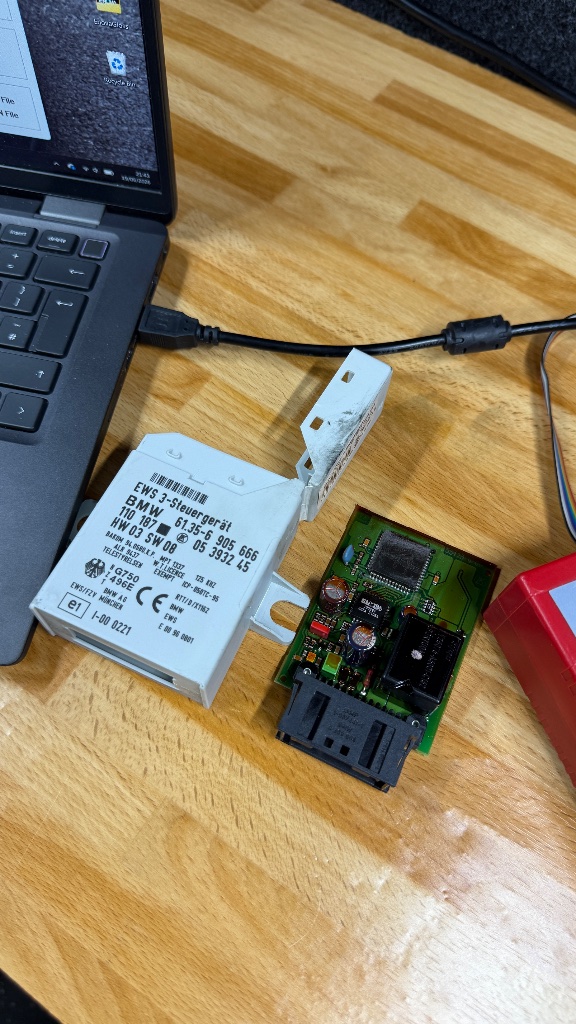
BMW E46 EWS Spare-Key Programming
This vehicle was not diagnosed for a Key Not Detected fault. It is a genuine example of KeyLogik working directly with the BMW EWS immobiliser and key-authorisation system during spare-key programming in Wantage, Oxfordshire.
Read the full case study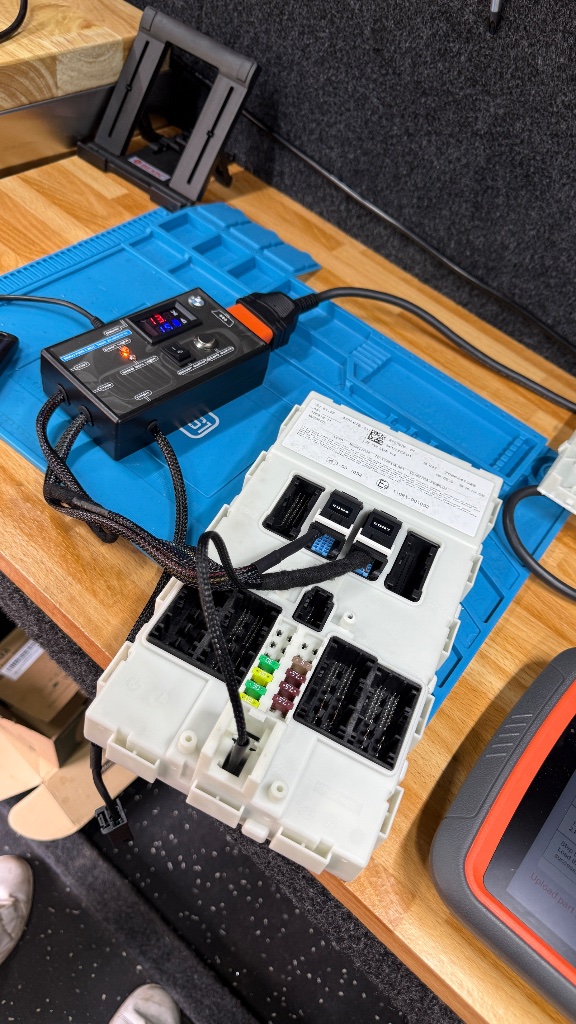
BMW M140i FEM Key Programming
This was also a spare-key job rather than a Key Not Detected repair. The BMW FEM participates in key and vehicle-security functions, and this genuine Abingdon job demonstrates KeyLogik's experience working with this type of system during key programming.
Read the full case studySee more genuine work on our Our Work page.
Key Not Detected in Oxfordshire?
KeyLogik is a mobile auto locksmith primarily serving Oxfordshire and surrounding counties, including Berkshire, Buckinghamshire, Wiltshire, Hampshire, Surrey, Bedfordshire and Northamptonshire.
We regularly attend customers in Oxford, Didcot, Banbury and Bicester, as well as the wider region. If your car is saying "Key Not Detected" and you need help, send us your vehicle details and we can check whether we currently support your make and model.
Car Saying Key Not Detected?
Send us the following and we can check whether the vehicle and key system are currently supported:
- Registration number
- Vehicle year
- Location
- Photo of the key
- Whether a spare key works
- Whether the backup sensing method works
- The exact dashboard message if possible